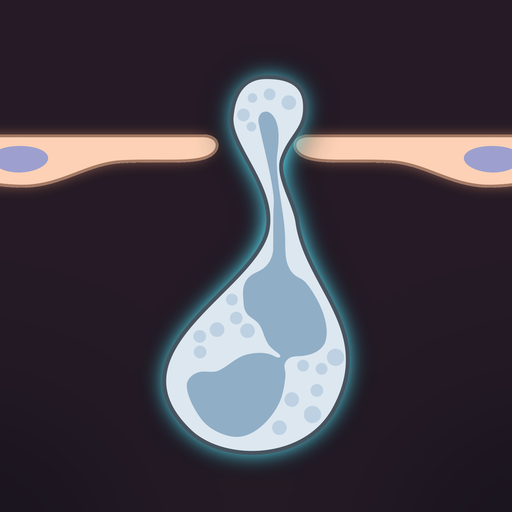

First responder. The fastest innate cell and the hardest hitter, but fragile — it trades staying power for reach.
Field guide
Everything the game enforces, written down. This is the same reference the book button opens in-game — generated from the game's own source, so it cannot drift from what you are playing.
Objective
- Win — clear the outbreak
- No pathogens left and no infected tissue. Killing the last virus is not enough on its own: an infected cell keeps shedding until it dies.
- Lose — the node is breached
- Any pathogen reaches the lymph node band along the bottom. This is the one that ends a match quickly if you ignore it.
- Lose — the barrier is gone
- More than 85% of the epithelial barrier is destroyed. Infection and your own cytotoxic cells both count towards it, so clearing an infection is never free. The side panel tracks what is left.
Cells
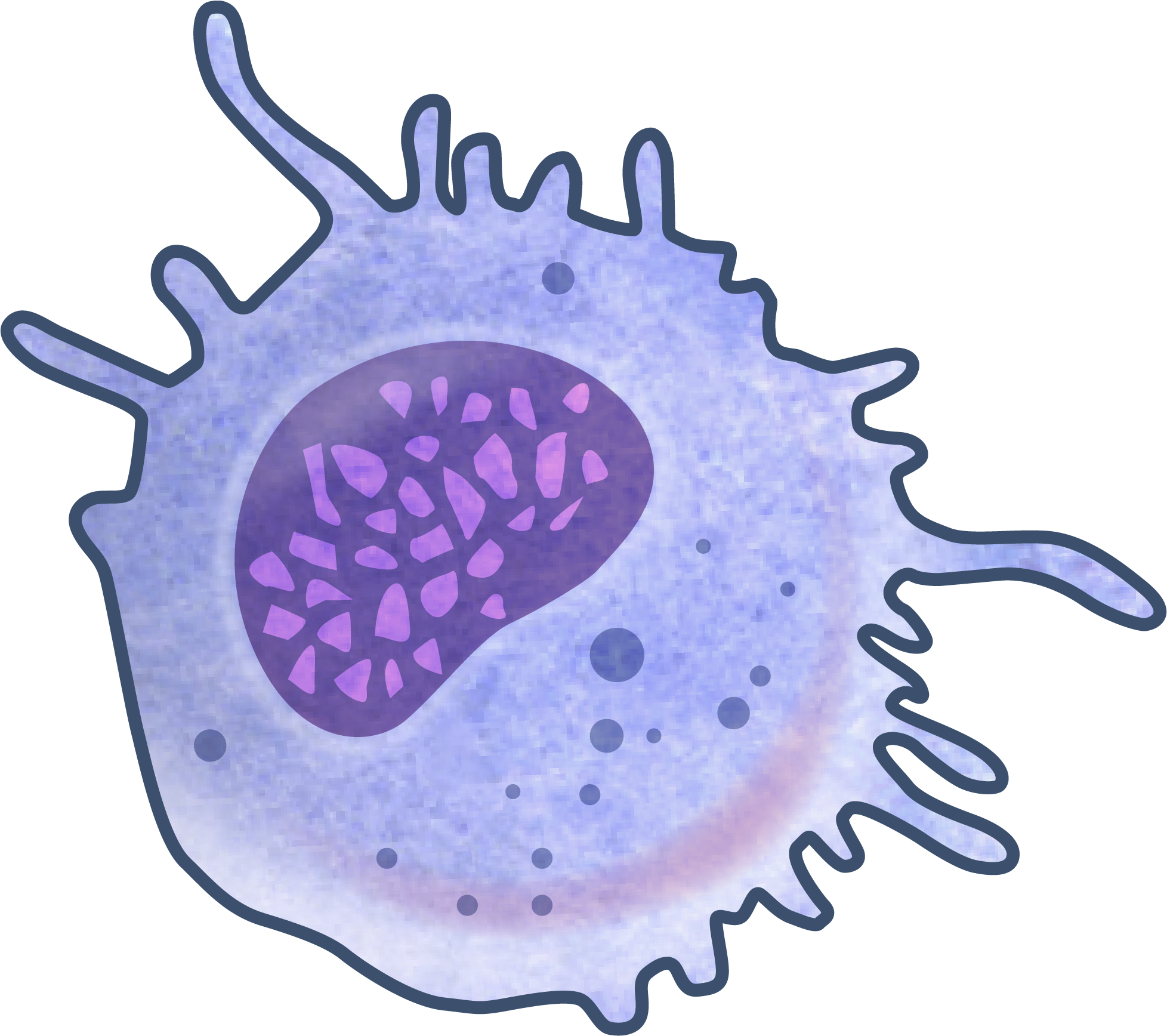
Durable generalist. Patrols tissue, eats what it finds, and can use both corridors, so it goes anywhere you need it.
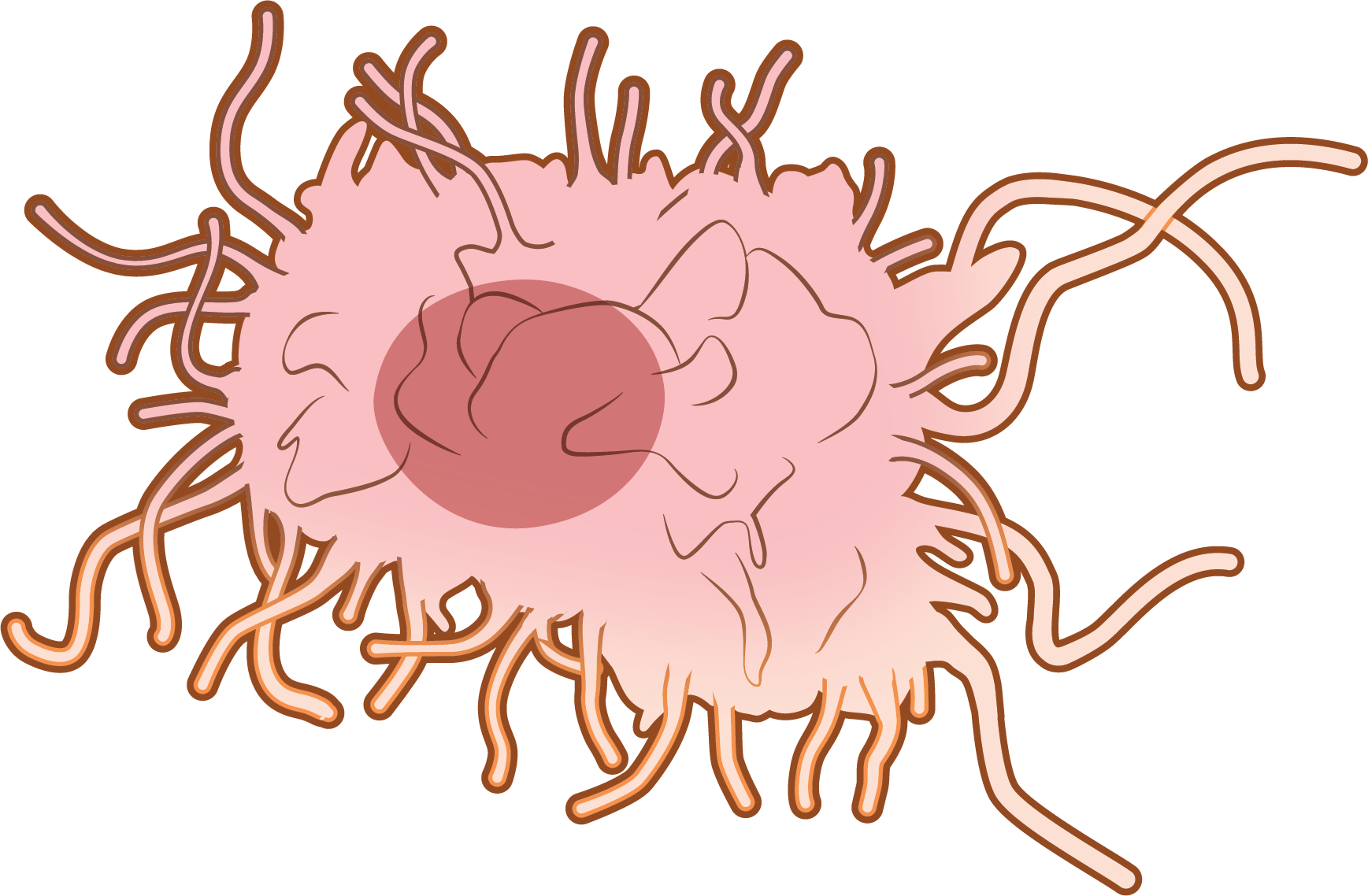
Barely fights. Its job is to collect antigen — from its own kill, or from the debris another cell leaves behind — and carry it to the lymph node. That is what unlocks adaptive immunity.
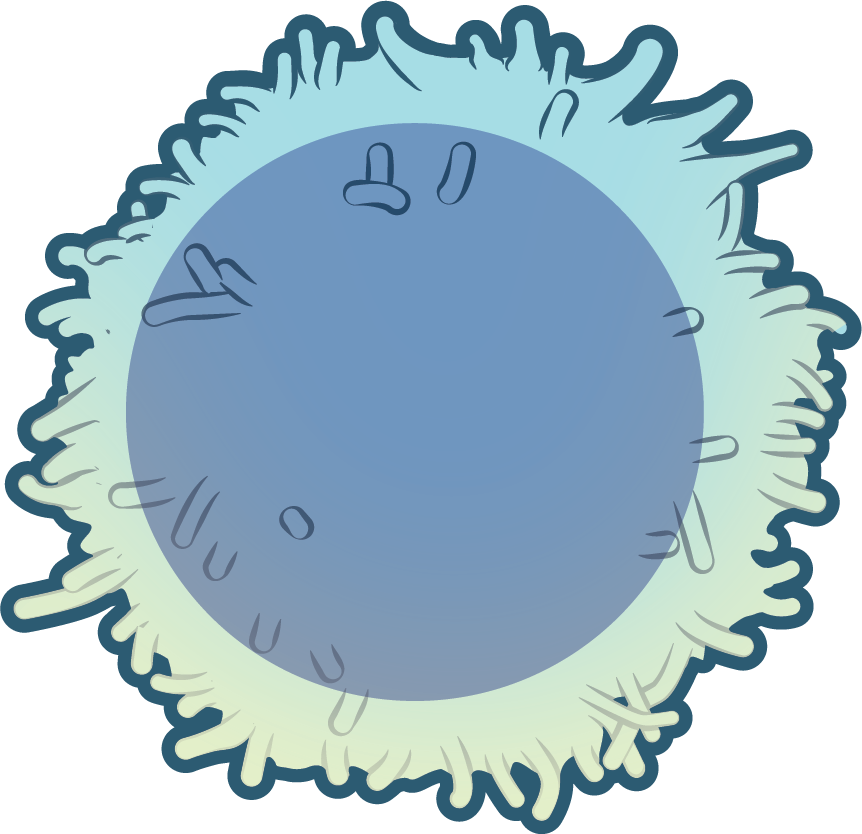
Adaptive. Destroys an infected host cell outright, before the virus inside finishes replicating. The tissue is lost either way, but a cell killed early seeds nothing, where one left to burst infects everything around it.
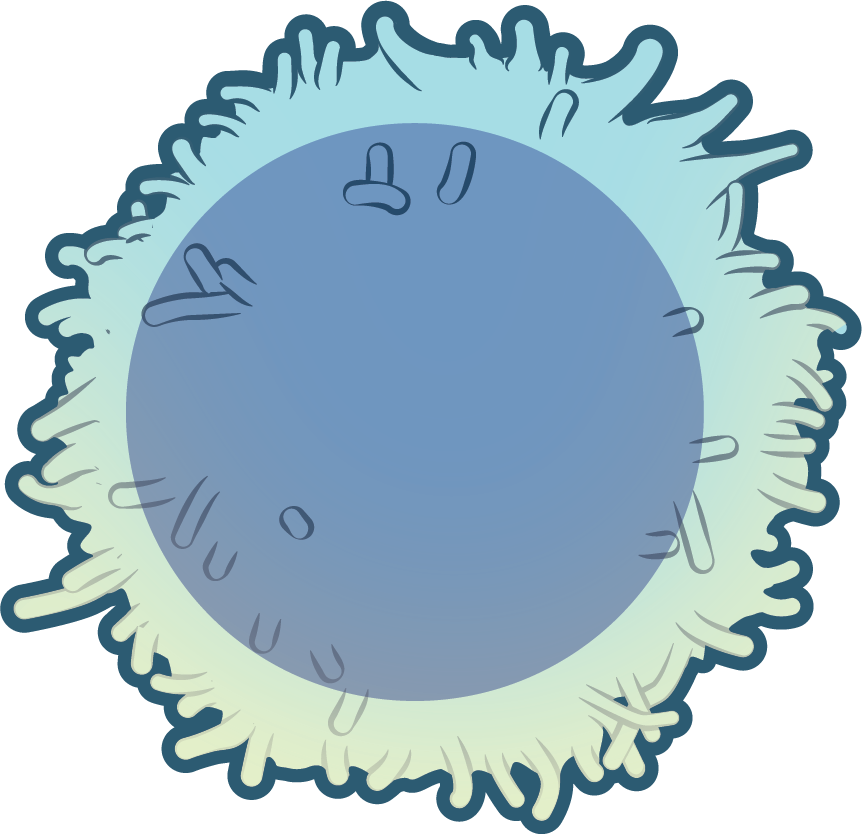
Adaptive, and a force multiplier rather than a fighter. A B cell in contact with a CD4 matures at 2x the rate, which halves the time it spends being hit, and a macrophage in contact hits 1.5x harder.
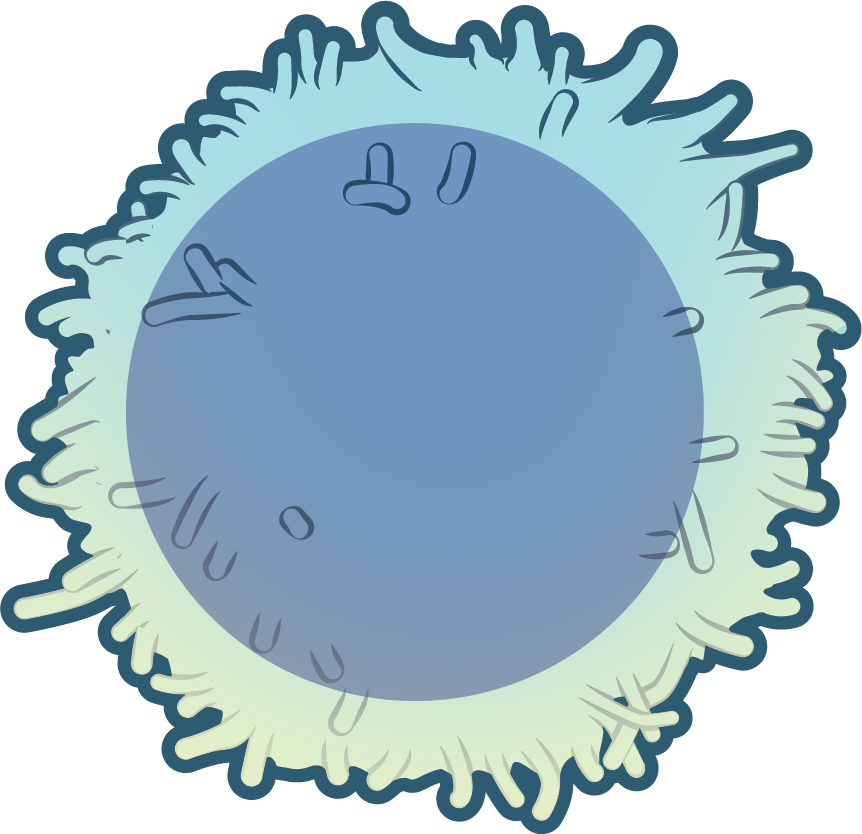
Adaptive, and never attacks. Cytokines spill onto the healthy tissue around an infection: an uninfected cell past 50% inflammation starts losing integrity every turn, whether or not anything infected it. A Treg strips inflammation from everything within 2 steps, protecting the bystanders.
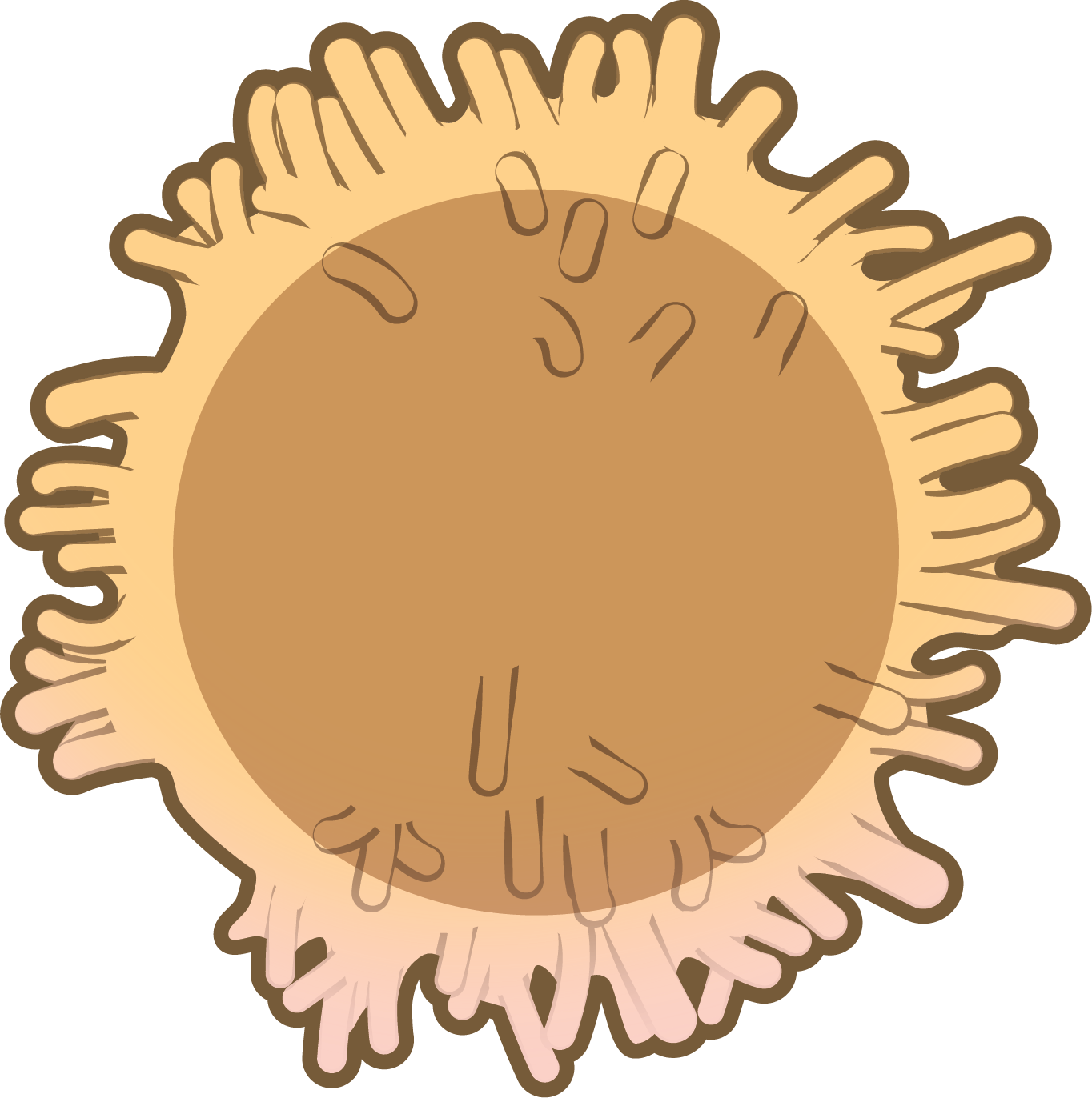
Adaptive, and defenceless. Walk it into contact with a pathogen or with viral debris and keep it there: after 3 turns of contact it differentiates into a plasma cell. Losing it before then wastes the whole trip.
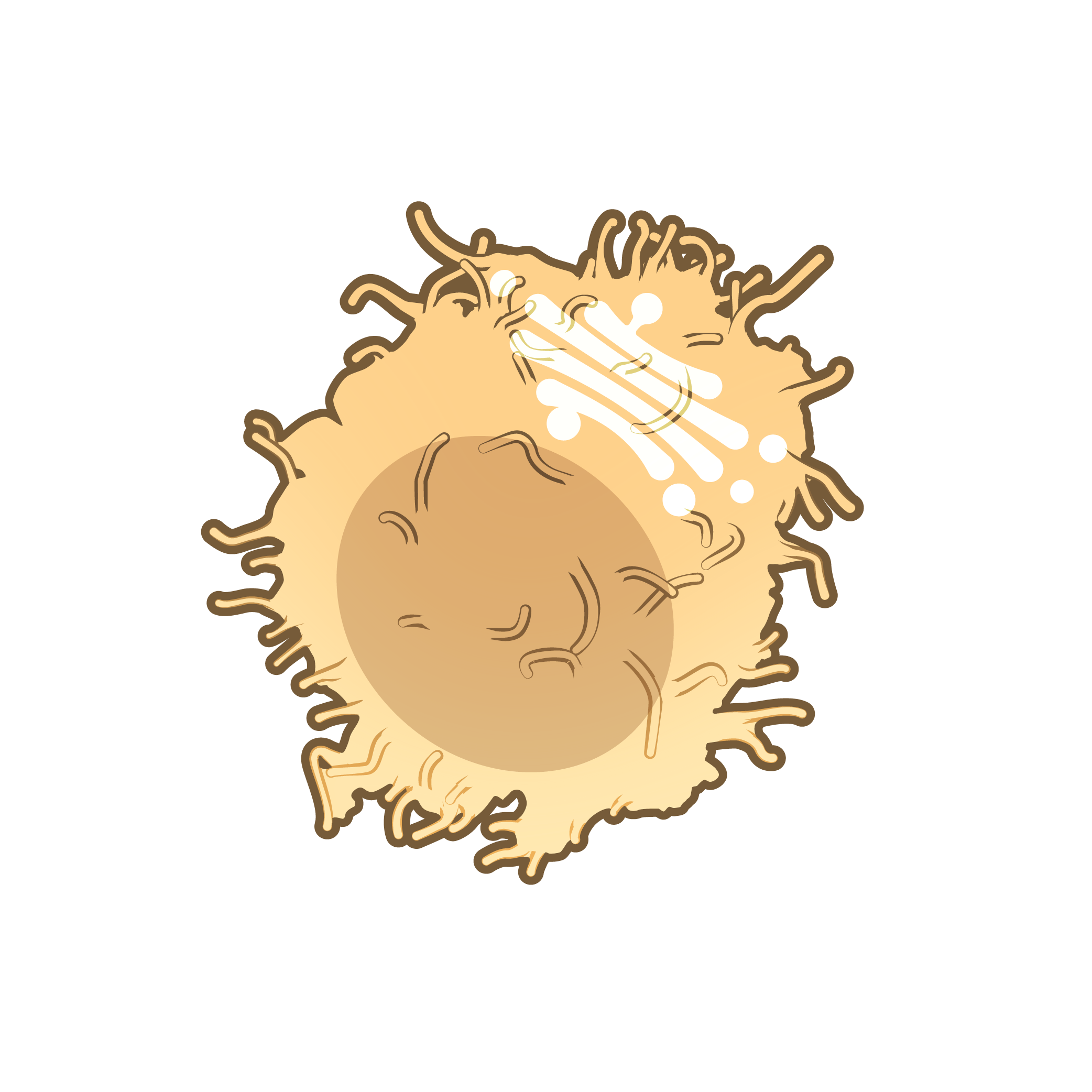
What a B cell becomes. It does not fight — it coats every pathogen within 2 steps in antibody, and an antibody-bound particle dies to the very next hit from anything. The gold field on the tissue is that reach, so you can see where to stand it. It only binds the variant its B cell was raised on.
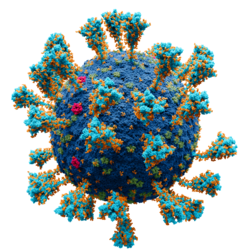
The threat. Infects the epithelial cell it stands on, strikes any immune cell it touches, and rides the bloodstream toward the lymph node. Reaching the node wins it the match. A particle ringed in orange is an escape variant: see MUTATION.
Difficulty
- Vaccinated
- Easy. Your adaptive response is already primed. T cells and B cells from turn one. The virus never mutates.
- Normal
- The intended fight, balanced as designed. A dendritic cell must carry antigen before T and B cells unlock.
- Anti-Vaxxer
- Hard. Less to spend, and the virus moves faster. 30% less ATP every turn. Infected cells shed far more often. The virus mutates readily.
Systems
- Mutation
- Every particle a cell sheds can be an escape variant, ringed in orange. Antibody is raised against one variant and binds no other, so a plasma cell that was clearing the board keeps working on the old strain while the new one walks straight through its field. The answer is another B cell, matured on the new variant's antigen. How often this happens is set by the difficulty: never on Vaccinated, readily on Anti-Vaxxer.
- ATP
- 4 a turn from the stroma on Normal, spent on recruiting. It is the only income, and it does not scale, so every cell you field is a choice against another. Anti-Vaxxer pays less.
- RIG-I sensing · 20 ATP
- Unlocked once any immune cell lands a killing blow on a virus. Fit it to an infected barrier cell and it secretes interferon, which makes nearby pathogens take double damage, and IL-1, which raises inflammation on that cell and its neighbours. Healthy neighbours that bind the interferon switch on for free once infected.
- Standing orders
- Tap a destination further than one turn away and the cell walks there over several turns, re-routing around anything that moves into the way. Moving or attacking it by hand cancels the order.
- One action a turn
- Attacking, or lysing infected tissue, ends that cell's turn however much movement it had left.
Terrain
- Epithelium
- The barrier, and the only tissue a virus can infect. Three rows deep, so the outbreak has to chew through it. Healthy tissue caught in heavy inflammation burns down too, and every cell lost counts towards the barrier defeat.
- Stroma
- Connective tissue. Generates all of your ATP.
- Blood vessel
- The only route between open tissue and the lymph node — for your cells and for the virus. Defend it.
- Lymphatic vessel
- A second corridor the virus cannot enter. This is how a loaded dendritic cell gets home safely.
- Lymph node
- Recruit here. If a pathogen reaches it, you lose.